Frequently Asked Questions About Garage Door Repair in Los Angeles
A faulty garage door can impact the security of your home, vehicle access, and daily activities. Whether the garage door will not open, makes unusual noises, or has noticeable damage, the proper repair depends on the failed component, the door’s age, and the overall state of the entire system. Los Angeles homeowners also need to consider coastal corrosion, limited neighborhood access, and https://expertgateservicerepair1-101-101-10.hexaforgey.com/posts/best-garage-door-repair-services-in-sherman-oaks-ca occasional Santa Ana winds.
Which garage door concerns need urgent repair?
Some garage door problems are troublesome, while others present an immediate safety risk. A broken garage door spring can leave a heavy door unsupported. Do not attempt to lift or operate a door if the spring is clearly broken, stretched, separated, or hanging loose. A professional can identify whether the system uses a torsion spring mounted above the door or an extension spring positioned along the horizontal tracks.
A broken cable is another urgent concern. The garage door cable helps transfer spring tension and keep the door aligned. If a garage door cable is frayed, detached, or wrapped incorrectly, operating the opener may cause the door to twist, fall, or damage other parts.
A door that is garage door off track should also stay closed until inspected. Bent rollers, damaged hinges, loose brackets, or an impact can push the door out of alignment. Never try to pull a heavy sectional garage door back onto its garage door track while the spring or cables remain under tension.
Garage door safety sensors are essential as well. These small devices near the floor should point toward each other and stop the door from closing when an object interrupts the beam. If the sensors are misaligned, damaged, or bypassed, the door may close on a person, pet, or vehicle. A Los Angeles garage door technician should examine the sensors, wiring, opener force settings, and reversing function during a safety inspection.
Other warning signs that justify prompt service include a door that drops suddenly, a loud bang from the garage, burning smells from the opener, loose hardware, cracked drums, and a door that is visibly uneven. A noisy garage door may only need lubrication or a replacement garage door roller, but grinding, scraping, and popping sounds should not be ignored.
How much does garage door repair in Los Angeles?
The typical garage door repair cost in Los Angeles often ranges between approximately $ hundred and several hundred dollars, depending on the repair. Small adjustments, lubrication, sensor alignment, and small hardware fixes are usually more affordable than spring, cable, track, or opener work. A complicated repair involving multiple components can cost more.
Because companies use various pricing models, ask how the total is calculated. The quote may include a service call fee, diagnostic time, labor cost, replacement parts, disposal, and taxes. Some companies apply the service call toward completed work, while others charge it separately. A clear repair estimate should identify each item rather than provide only a vague total.
As a general planning guide, homeowners may see these approximate ranges:
- Minor adjustment, lubrication, or sensor service: about $75 to $200.
- Roller, hinge, bracket, or cable repair: about $150 to $450.
- Track repair or realignment: about $150 to $500, depending on damage.
- Spring replacement: about $200 to $500 for a standard residential door.
- Garage door opener repair: about $100 to $350.
- Opener replacement and installation: commonly $350 to $900 or more.
These are budgeting ranges, not a guaranteed quote. Los Angeles garage door repair pricing can differ by neighborhood, travel distance, door size, access conditions, and the parts required. Emergency service outside normal hours may involve a higher fee.
What affects local garage door repair pricing?
Repair complexity is one of the main factors. Replacing one roller is different from correcting a twisted door, bent track, broken cable, and damaged drum. A technician may also discover worn bearings, hinges, or mounting brackets once the system is disassembled.
Replacement parts affect the final cost. Standard residential components are generally more affordable than heavy-duty hardware, custom rollers, corrosion-resistant springs, or parts made for a large insulated door. The garage door brand and model can also affect availability and compatibility.
After-hours service is usually costlier because it requires an after-hours, weekend, or holiday visit. If the door is properly secured and safe to leave closed, scheduling routine service may decrease the price. However, a door that blocks a vehicle, leaving open the garage, or causing a fall hazard may justify emergency garage door repair.
Los Angeles access can impact scheduling and labor. Dense neighborhoods may have narrow driveways, shared alleys, street-parking restrictions, or limited space for a service vehicle. Inform the company about access limitations before arrival. In areas such as downtown Los Angeles, Silver Lake, Venice, or Long Beach, coordinating gate access and parking can avoid delays.
How much does garage door spring replacement cost?
The average garage door spring cost for home replacement is approximately $200 to $500, although larger-than-standard doors, special hardware, multiple springs, and emergency scheduling can add to the price. The quote should include both springs when the door uses a matched pair, the labor, adjustment, and a final leveling and safety test.
A torsion spring holds energy on a shaft above the door. It generally provides steady lifting and is common on contemporary residential doors. An extension spring stretches alongside the horizontal tracks. Both systems are under considerable tension and can cause serious injuries if handled without care.
Searches such as “ garage door spring replacement near me” can help identify local providers, but proximity alone does not establish quality. Ask whether the company supplies the correct spring size, explains the warranty, and tests the door after installation. A proper repair should include inspection of the drums, garage door cable, bearings, brackets, and opener settings.
Los Angeles homeowners near Santa Monica, Venice, and Long Beach should ask about corrosion-resistant springs and hardware. Marine air can worsen rust, particularly when the garage is poorly ventilated or exposed to coastal moisture. A durable garage door seal can also limit moisture and dust entering beneath the door.
When should you repair or replace a garage door panel?
A garage door panel may be possible to repair when the damage is confined to a slight dent, a hinge that has come loose, or small cosmetic damage. A technician may realign or reinforce a panel if it still operates smoothly and remains structurally sound. Matching a replacement section can be complicated, especially if the manufacturer has ended production of the design.
Panel replacement is more appropriate when the panel is severely bent, cracked, rusted through, or causing the rest of the door to become misaligned. On a sectional-style garage door, one damaged section can sometimes be replaced without replacing the complete door. However, if more than one section are worn, insulation has failed, or the tracks and rollers are also deteriorated, complete replacement of the garage door may offer better value.
Compare the panel quote with the estimated cost of replacing the garage door. A replacement panel may cost roughly $300 to $900 or more, depending on dimensions, material, insulation, windows, and brand. A complete door can cost considerably more, but it may include new tracks, springs, rollers, seals, and installation. The correct choice depends on the door’s age, appearance, energy performance, and expected remaining lifespan.
Do not assess the damage only by appearance. A vehicle impact can distort the vertical track, shift the opener arm, or damage the cable system behind an dent that looks minor. Have the entire assembly inspected before using the door normally.
What does it cost to replace a one-car or two-car garage door?
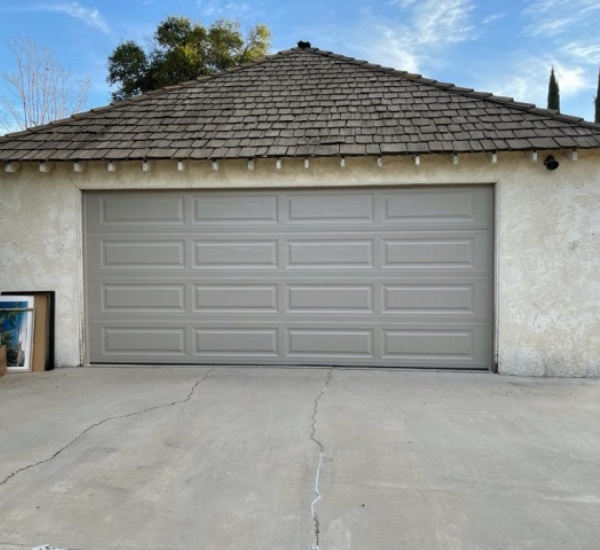
Garage door size is a significant cost factor. A single-car door is often approximately 8 or 9 feet wide, while a two-car garage door is commonly 16 feet wide, though openings differ. A larger door requires heavier panels, more durable springs, longer tracks, and an opener rated for the load.
The 2 car garage door replacement cost, also described as the two car garage door replacement cost, commonly ranges from about $1,200 to $4,500 or more for home replacement and installation. Basic non-insulated doors may cost less, while insulated steel, custom wood, carriage-style, glass, and high-design doors can cost more than that range.
A one-car overhead garage door replacement may range from approximately $900 to $3,000 or more. The final price can include removal of the old door, new tracks, springs, rollers, a garage door seal, installation, trim work, and disposal. Confirm whether the opener is included or quoted separately.
Before approving a complete garage door installation, verify the opening measurements, headroom, side room, backroom, insulation requirements, window placement, and wind exposure. Los Angeles experiences intermittent Santa Ana winds, so secure tracks, hinges, rollers, brackets, and weather seals are especially important after a high-wind event.
When replacing the complete system or modifying the opening, confirm applicable local building or permit requirements with the City of Los Angeles Department of Building and Safety or the relevant city authority. Requirements can vary between Los Angeles, Long Beach, Santa Monica, Pasadena, and other cities in the county.
How much does garage door opener installation cost?
The garage door opener installation cost commonly ranges from approximately $350 to $900, including a standard opener and professional installation. Heavy doors, high ceilings, unusual mounting conditions, battery backup, cameras, and extra remotes can add to the price. If existing wiring or brackets are unsafe, additional work may be necessary.
A chain-drive opener is often a practical, budget-friendly choice and can handle many standard residential doors, though it may transmit more vibration. A belt-drive opener generally operates more quietly and may be better suited when a bedroom or living space is near the garage.
A smart garage door opener can connect to a phone app or home automation platform, allowing alerts and remote status checks. Ask about compatibility, Wi-Fi strength, privacy settings, battery backup, and whether the product includes a manufacturer warranty. A smart device does not replace physical garage door safety sensors or a properly balanced door.
If the door is heavy, slow, or uneven, the problem may not be the opener. An opener should not make up for a broken spring, binding track, worn garage door roller, or damaged cable. A professional should inspect the mechanical system before recommending a new opener.
How can you find reliable garage door repair near me in Los Angeles?
For a search such as “ garage door repair near me,” prioritize a local qualified garage door contractor with verifiable business information and appropriate protection. Ask for the company’s license details where applicable, proof of general liability coverage, and confirmation that technicians are trained for spring and opener work.
Read customer reviews for patterns rather than relying on one rating. Look for comments about promptness, accurate quotes, clean workmanship, communication, and whether the company honored its warranty. Reviews mentioning pressure to approve unnecessary replacement or unexpected charges deserve caution.
Request a diagnosis from a Los Angeles garage door technician who will inspect the full system. A reputable provider should explain whether the issue involves the spring, garage door track, rollers, cables, panels, opener, or safety sensors. Be cautious if a technician recommends complete replacement without documenting why repair is unsuitable.
Availability matters, but “same-day garage door service” should not be the only selection criterion. Confirm the arrival window, after-hours charges, parts availability, and whether the person providing the quote will perform the work. For an unsecured or immobile door, emergency service may be appropriate; otherwise, a scheduled visit may provide more pricing options.
What should you check before hiring a garage door repair company?
Before work begins, obtain a written estimate. It should list the diagnosis, parts, labor, service call, taxes, disposal, and any emergency surcharge. Ask whether the price can change if hidden damage is discovered and require approval before additional work.
Review the guarantee for parts and labor. A spring warranty may differ from an opener or panel warranty. Confirm whether the warranty is a manufacturer warranty, a company labor warranty, or both, and ask what maintenance or misuse could void coverage.
Ask whether same-day assistance is available and whether it carries a higher rate. You should also confirm arrival access, especially if your property uses a shared alley, gated driveway, or restricted parking. Providing photographs of the door and opening can help the company bring appropriate labor and parts.
For garage door installation, complete garage door replacement, structural alterations, or changes to the opening, ask about permit requirements. Confirm applicable rules with the City of Los Angeles Department of Building and Safety or your local city authority. The contractor should not pressure you to ignore required approvals.

Finally, ask what will be tested at completion. The technician should check balance, spring tension, cable alignment, track movement, roller condition, opener force, reversing action, emergency release, and garage door safety sensors. Preventive maintenance and a documented safety inspection can reduce future failures.
Garage Door Repair FAQs
How much does garage door repair cost in Los Angeles?
Minor repairs may cost about $75 to $200, while cables, rollers, tracks, springs, and openers often range from approximately $100 to $500. Complex repairs and emergency visits can cost more. Ask for a written repair estimate that itemizes the service call, labor and parts, and any after-hours charge.
How much does it cost to replace a garage door spring?
Residential spring replacement commonly costs about $200 to $500, depending on the spring type, door size, number of springs, parts, labor, and timing. A torsion spring and extension spring require different hardware and procedures. Because both are under high tension, use a qualified professional rather than attempting the replacement yourself.
EM Garage Doors And Gate Service Inc19629 Cantara St, Reseda, CA 91335
(818) 919-0785
https://emgaragedoorsandgateservice.com/
https://maps.app.goo.gl/XujLWxA4pAQKARQT8
34.2193569, -118.5613022
Is it cheaper to repair or replace a garage door panel?
Repair is usually cheaper when the damage is small and the panel remains straight and structurally sound. Replacement may be better for severe dents, cracks, rust, or repeated damage. Compare the panel price with the full garage door replacement cost, especially if the door is old or several components already need work.
How do I find dependable garage door repair close to me?
Choose a nearby contractor with valid licensing, insurance, transparent customer reviews, and expertise with your door brand and system. Ask for a written estimate, inquire about warranties, and confirm who will perform the repair. A reputable company clarifies the problem and repair options without pushing you into unnecessary garage door replacement.
Can I safely repair a broken garage door spring myself?
No. A broken spring can still contain dangerous stored energy, and wrong removal or installation can cause severe injury or property damage. Keep people and vehicles at a safe distance from the door, disable use of the opener, and contact a licensed garage door contractor for emergency garage door repair or scheduled service.
Regular garage door maintenance can include lubrication recommended by the manufacturer, visual checks of cables and rollers, wiping the safety sensor lenses, and verifying the automatic reverse function. Do not alter springs, cables, drums, or high-tension hardware without professional training.